
Innumerable data has been provided to us from the sixteenth and seventeenth century Mughal era, however, to check the veracity of this data we need more data and in all likelihood keep our minds open for its interpretation.
I primarily write this to convey to the readers to not to misinterpret the history based on varied yet little data that we have. One source tells us about mughals being cruel, bigoted and barbaric hordes who ruined india however, another source would tell how mughal rulers established a peaceful co-existence among all religions and how they developed certain policies to ensure the same.
BARBARIC: Why and How?
According to historians, Babur invaded india when he was only fifteen years old with an army of approximately 1500 soldiers. Since Babur was the first ruler of the mughal dynasty, the invasion through which the rule was established eventually may have been one of the reasons for labelling the mughal lineage as barbaric.
Some sources tend to describe their rule as tyrannical and synonymous to that of a holocaust against Hindus, Sikhs and Buddhists.
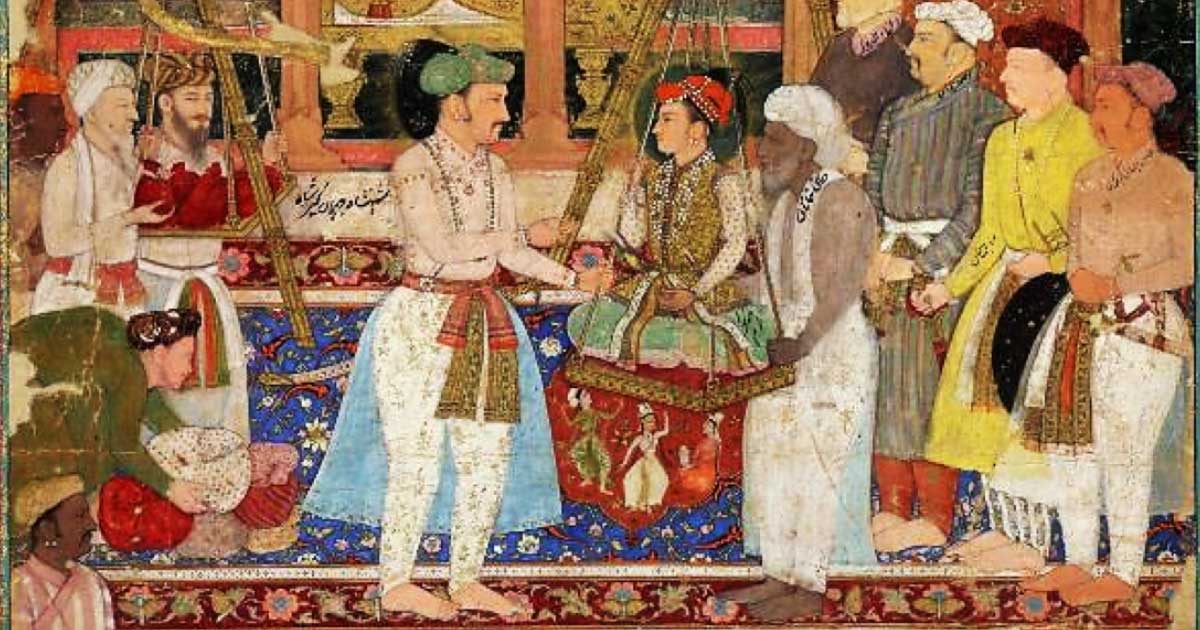
Instances of cruelty by the mughal emperors can be witnessed in paintings, records etc yet again it remains nearly impossible to figure why they did what they did and most importantly how. We may read about the temple constructed by Babur which illustrated hindu skulls or atrocities caused by emperors recorded in the chronicles or simple the plunders, murders and rapes. It is a common habit to relate the past with contemporary interpretations but that comes with its own ambiguities and errors. Hence, to a certain level it is correct to consider the following instances as actual truth events but one must never take the at the face value.

BENEVOLENT: Why and How?
The two main emperors – BABUR and AURANGZEB, allegedly regarded as the most brutish rulers of their times makes us generalise the the mughal bloodline as bloodthirsty. This generalisation is what makes us prejudiced against certain facets of history and these culminate inside of us during the present times as well. On the flip side of the coin, taking the reign of AKBAR– the greatest mughal ruler known for his military conquests and religious tolerance, we get to know a lot about the peaceful co-existence established in the era among varied religions and beliefs. Akbar is well known for his religious policies, his quest for religious knowledge made him broadminded so much so that he did not believe in imposing any particular religion on his subjects. To take a few examples: Akbar’s pragmatic approach towards cooperation with the Hindus by abolishing jizya establishing matrimonial alliances and freedom of worship, his inclination towards the bhakti movement, his consideration for Hindu sentiments( banning the killing of cows) etc, completely runs contradictory to the holistic definition of mughals as diabolical.

Do we know the truth?
I believe our history is a compendium of magnanimity and till date, to deduce the truth out of the present facts is a very crucial yet strenuous task. Even though there is a barrel of verified data regarding the mughal history, there still exist two sides of the coin while discussing the nature of the former rulers and that still remains discredited. The truth may depend on what we are willing to perceive when we read about history especially. While critical analysis is an incumbent component, in my opinion, a positive outlook shall always prevail.
SOURCES- https://www.bbc.co.uk , https://www.sikhnet.com

 Connotation